Unlock Your Potential: Why Studying Feels Ineffective (And How to Fix It)

That familiar dread: hours at the desk, textbooks open, notes seemingly absorbed, yet when it comes time to recall, your mind draws a frustrating blank. If you've ever found yourself asking, "why studying feels ineffective," you're far from alone. This isn't a sign of intellectual inadequacy; rather, it often points to a mismatch between how we think we should study and how our brains actually learn.
Millions of students and lifelong learners hit this wall. They invest significant time, effort, and sometimes money, only to feel their grasp of the material remains frustratingly tenuous. This common feeling of studying without real progress leads to burnout, stress, and a significant dip in motivation. Acknowledging this universal struggle is the first step toward transforming your learning experience from a battle against a blank page into a rewarding journey of true understanding.
Unmasking the Culprits: Common Reasons for Study Ineffectiveness
You probably feel like your study efforts are ineffective because you're inadvertently falling into common traps that hinder genuine learning and memory retention. Many of these ineffective study habits stem from methods we picked up in school that, while seemingly productive, don't align with cognitive science.
One of the biggest culprits is passive learning. Think about it: how often do you simply reread notes, highlight entire paragraphs, or passively listen to lectures, convinced you're absorbing information? Studies show these popular techniques create an "illusion of competence." You feel familiar with the material, mistaking recognition for actual understanding and recall. You might even find yourself nodding along, thinking, "I know this!" only to find the knowledge evaporates when you need to apply it.
Furthermore, a lack of active recall and spaced repetition severely undermines long-term retention. Our brains aren't sponges that soak up information indefinitely; they need to work to retrieve it, and they benefit from repeated exposure spread over time. Without these crucial components, much of what you "study" simply never makes it past short-term memory.
Your environment plays an enormous role, too. A chaotic study space, constant notifications, or even background noise can fragment your attention, making deep focus impossible. Think of your brain as a single-tasking processor; every distraction pulls processing power away from the task at hand. Poor sleep also sabotages your efforts; while you sleep, your brain consolidates memories. Skimp on sleep, and you hobble this vital process. Moreover, basic physiological needs like proper nutrition and hydration directly affect cognitive function. Try to learn complex material when your brain is running on fumes and sugar crashes; it simply won't work efficiently.
The Science Behind Effective Learning: How Our Brains Actually Learn
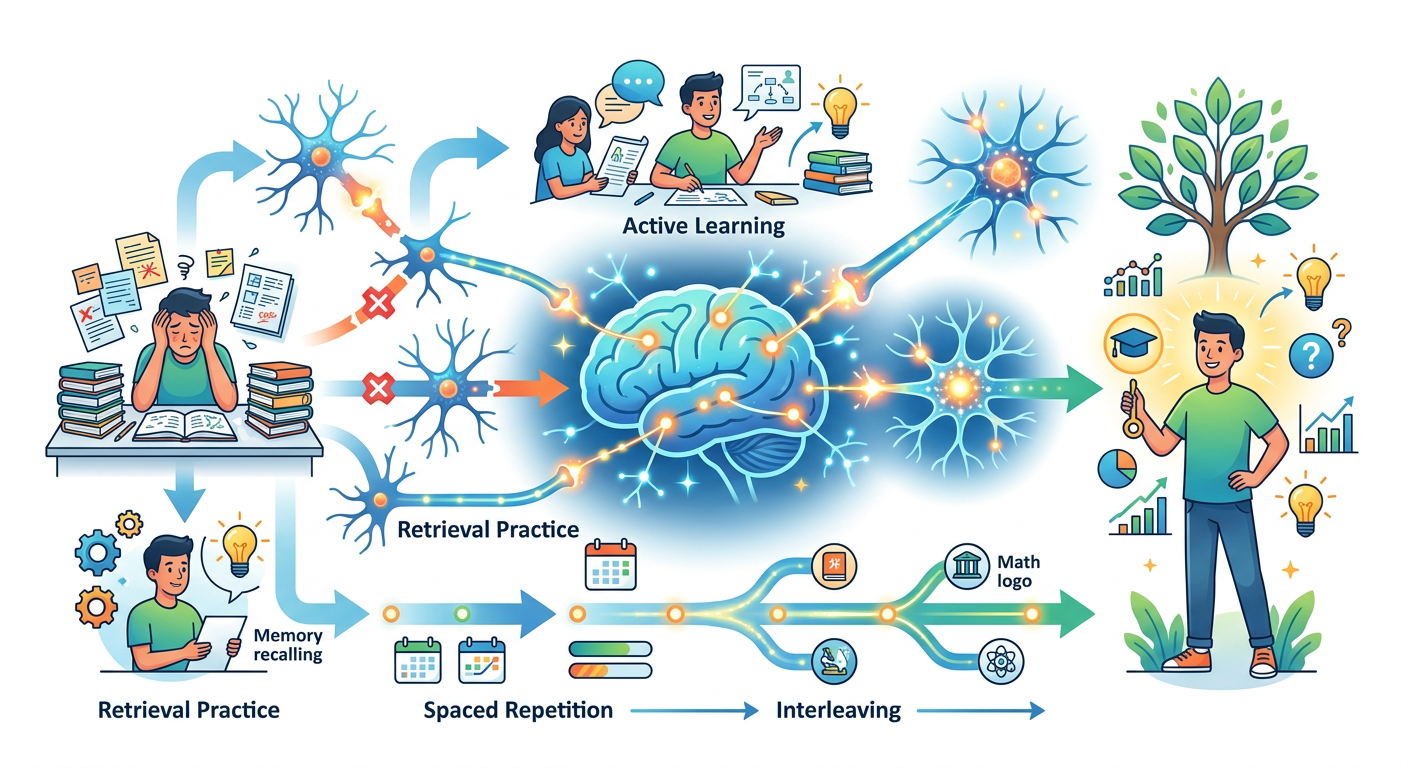
Our brains learn through a fascinating, multi-stage process that, once understood, can dramatically improve why studying feels ineffective. Learning isn't about mere exposure; it's about active processing and robust connections. Effective learning involves three core stages of memory formation: encoding, storage, and retrieval.
Encoding is how we initially process information – converting sensory input into a usable memory construct. This stage is most effective when we process information deeply, linking it to existing knowledge or giving it meaning.
Think of it as creating a strong, unique address for a new piece of information in your brain's vast library. Then comes storage, where memories are maintained over time. This isn't a static process; sleep plays a critical role here, consolidating newly encoded information into more stable, long-term forms. Finally, retrieval is accessing stored information when needed. The act of retrieving itself strengthens the memory, making it easier to pull up next time.
This entire process is powered by neuroplasticity, the brain's incredible ability to reorganize itself by forming new neural connections throughout life. Every time you learn something new, every time you retrieve a memory, you're literally rewiring your brain. This means your capacity for learning and improving your study habits isn't fixed; it's dynamic and responsive to your efforts.
Another crucial concept is Cognitive Load Theory. This theory suggests that our working memory has a limited capacity. When we're presented with too much new, unorganized information simultaneously, our working memory gets overwhelmed, and effective encoding becomes impossible.
This is why breaking down complex topics into smaller, digestible chunks significantly aids learning. It's like trying to juggle too many balls at once; you drop most of them. Research from cognitive psychology consistently shows that managing cognitive load allows for better information processing and retention.
Actionable Strategies to Transform Your Study Habits
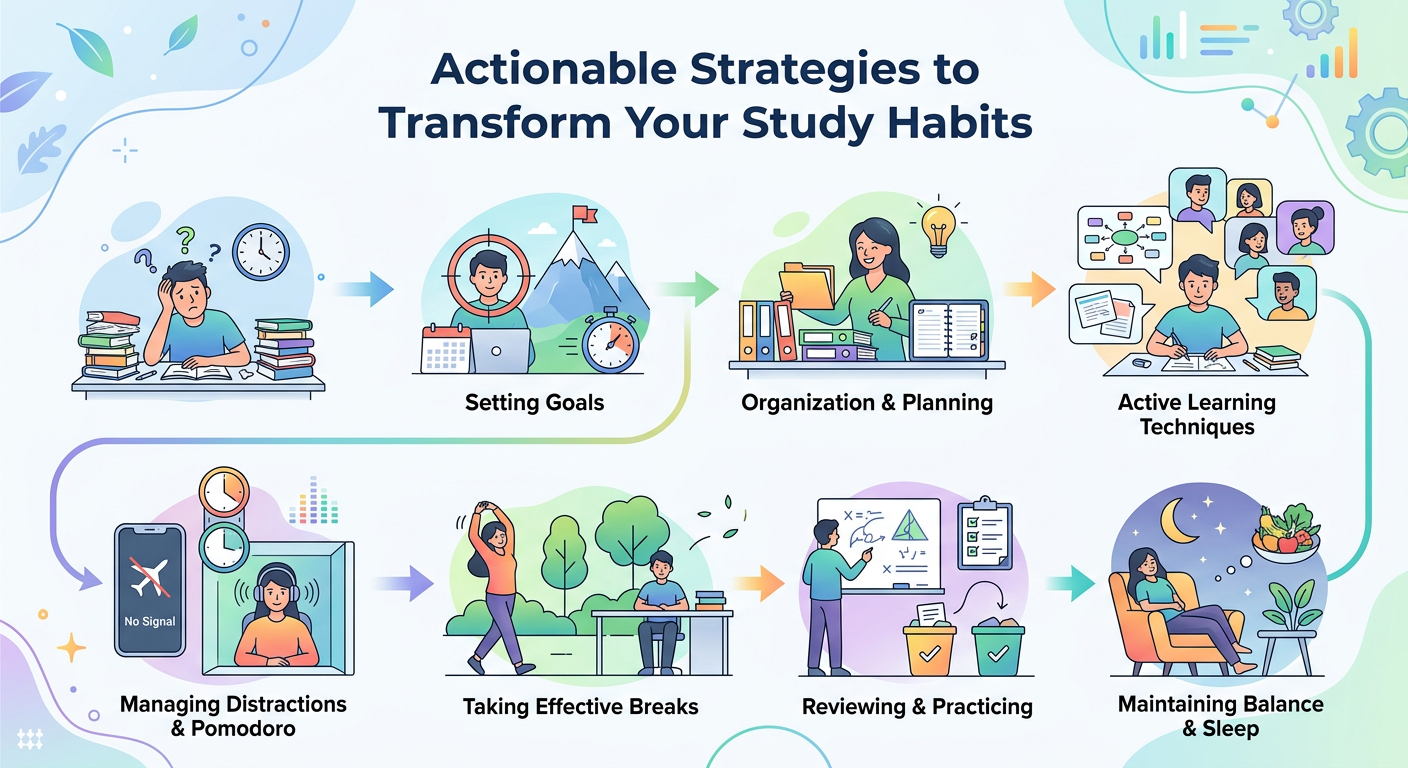
You can transform your ineffective study habits into highly productive ones by adopting science-backed strategies that align with how your brain naturally learns. The key is to move away from passive consumption and toward active engagement.
First and foremost, embrace active recall. Instead of rereading, quiz yourself. Use flashcards for definitions or facts, or simply close your book and try to explain what you just learned in your own words. This "testing effect" forces your brain to retrieve knowledge, strengthening those neural pathways. Learn more about its power in Active Recall vs Rereading.
Combine active recall with spaced repetition. This strategy involves reviewing material at increasingly longer intervals. Instead of cramming, dedicate short, focused sessions to revisiting topics over days, weeks, and even months. Tools like AIflashcard.net, Anki or Quizlet can automate this process, showing you forgotten concepts more frequently. Check out Cramming vs Spaced Studying for a deeper dive.
Time management also plays a critical role. Techniques like the Pomodoro Technique, where you focus intently for 25 minutes followed by a 5-minute break, can significantly boost concentration and prevent burnout. These structured intervals make it easier to start daunting tasks and maintain focus.
Optimize your study environment. Minimize digital distractions by using website blockers or putting your phone in another room. Create a physical space dedicated to studying, ideally quiet and clutter-free. Even a small change, like turning off notifications, can make a huge difference in sustained focus.
Never underestimate the foundational impact of sleep, nutrition, and hydration. Aim for 7-9 hours of quality sleep each night. Fuel your brain with nutrient-dense foods and stay well-hydrated. These aren't optional extras; they're prerequisites for optimal cognitive function. The National Sleep Foundation confirms that adequate sleep is crucial for academic performance.
Try explaining the material to someone else, or even to an imaginary student. When you attempt to teach, you naturally identify gaps in your understanding and are forced to organize and articulate concepts clearly. This process, often called the "protégé effect," deepens your own comprehension.
Finally, always connect new information to what you already know. Our brains are natural pattern-recognition machines; linking new concepts to existing frameworks creates a more robust and accessible knowledge network. If you want to refine these techniques further, consider exploring common study mistakes people make.
Beyond the Classroom: Applying Effective Learning to Life

Understanding why studying feels ineffective and then rectifying it yields benefits far beyond a better grade on the next exam. The strategies you develop to study effectively are transferable skills, crucial for lifelong learning and continuous personal development.
Think about building a career, learning a new hobby, or mastering a complex skill; the principles remain the same. Active recall, spaced repetition, and focused practice are just as valuable when learning a new programming language, perfecting a musical instrument, or understanding market trends.
These aren't just student tricks; they are fundamental cognitive tools that empower you to acquire and retain virtually any knowledge or skill. This adaptability is particularly useful as you encounter new subjects or different learning environments. A language learner might use flashcards for vocabulary (active recall), while a history student might create timelines and quiz themselves on key events.
Moreover, improved learning techniques strengthen your problem-solving and critical thinking skills. When you genuinely grasp concepts rather than just memorizing facts, you can apply that knowledge to novel situations, analyze information more effectively, and innovate.
This capacity for deeper understanding helps you tackle real-world challenges, whether it's developing a new business strategy or diagnosing a complex issue. The ultimate goal isn't just to pass a test, but to become an agile, adaptable thinker who can continuously grow and contribute, no matter the context.
Ready to Master Your Learning Journey?
Transform why studying feels ineffective into a powerful, effective learning experience. Join Bevinzey today and discover tools designed for active recall, spaced repetition, and real mastery.
Get Started FreeFrequently Asked Questions
Why do I feel like I'm studying a lot but not learning anything?
You likely feel this way because you're using passive study methods, such as rereading or highlighting, which create an illusion of competence but don't engage your brain in deep processing or effective retrieval. These methods feel productive but don't lead to strong, lasting memory formation.
What are the most common mistakes students make when studying?
Common mistakes include passive rereading, ineffective highlighting, focusing too much on low-value activities, cramming instead of spaced repetition, not actively testing themselves, and neglecting basic needs like sleep and nutrition. These habits contribute to why studying feels ineffective.
How can I make my study sessions more productive and less overwhelming?
Implement active recall techniques like self-quizzing and flashcards, use spaced repetition to schedule reviews, employ time management methods like the Pomodoro Technique, optimize your study environment to minimize distractions, and ensure you're prioritizing sleep and proper nutrition.
Is there a scientific reason why some study methods are better than others?
Yes, cognitive science reveals that methods promoting active engagement, memory retrieval, and distributed practice (like active recall and spaced repetition) align better with how our brains encode, store, and retrieve information. These methods leverage neuroplasticity and manage cognitive load more effectively.
How important is sleep and diet for effective studying?
Sleep and diet are fundamentally important. Adequate sleep allows your brain to consolidate memories and function optimally, while a balanced diet provides the necessary nutrients for brain health and sustained energy. Deficiencies in either can severely impair focus, memory, and overall learning capacity.
Can I change my study habits if I've always struggled with learning?
Absolutely. The brain exhibits neuroplasticity, meaning it can change and adapt throughout your life. By consistently applying science-backed study strategies, you can literally rewire your brain for more effective learning, regardless of past struggles.
Enjoyed this article?
Share it with others who might find it helpful.
Related Articles

How to Study for Exams with Poor Memory
How to Study for Exams with Poor Memory
Apr 2, 2026

How to Study for Exams While Working Full-Time
This guide provides actionable strategies and proven techniques to help you navigate the complexities of studying for exams while working full-time, ensuring academic success without sacrificing your career or personal life.
Apr 2, 2026

How to Study for Exams as a Working Student
Learn how to effectively study for exams as a working student with strategic time management, efficient techniques, and well-being tips.
Apr 2, 2026